






Workshop fans: advantages, limitations and alternatives
Heat is a real problem in industrial buildings. Global warming, combined with a restrictive, poorly insulated working environment, leads to summer temperatures in excess of 30 or 35°C. A workshop fan is often the first solution considered by companies. But other options, such as adiabatic coolers, are sometimes more appropriate.
What are the advantages and limitations of industrial ventilation?
The professional mobile fan is a simple, quick and inexpensive solution. That’s why many manufacturers choose this equipment. However, ventilation quickly shows its limitations. It doesn’t refresh the air: it simply stirs it.
Production workshops have three constraints:
and high ceilings
generated by machines and processes
or semi-open spaces
In this type of environment, hot air accumulates, and stirring it up only exacerbates the teams’ discomfort.
What is mobile adiabatic air conditioning?
Even powerful fans aren’t enough to bring down the temperature in an industrial environment. An adiabatic workshop air conditioner, on the other hand, proves effective.
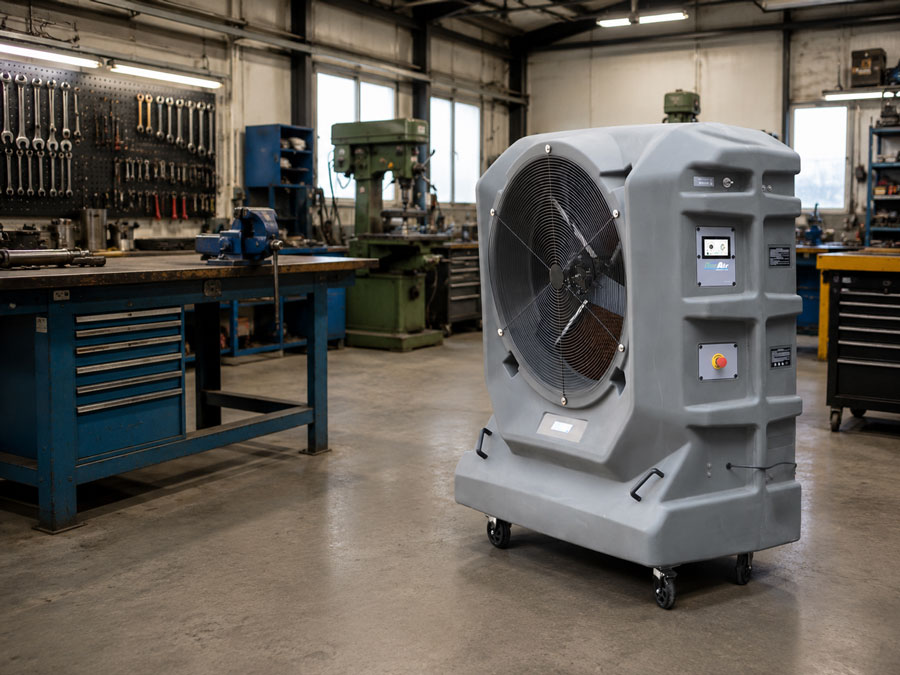
The principle is based on evaporation. Warm air is drawn in, passes through a wet heat exchanger that captures the heat and evaporates, then the cooled air is returned to the building. The unit is mounted on castors and requires only an electrical connection.
This solution offers solid advantages:
A drop in temperatures averaging 7 to 8°C, with the possibility of reaching 15°C or more
Low energy and water consumption
Low noise levels at all power levels
Quick installation, no work required, and mobile use
This air-conditioning system is part of a targeted cooling strategy. Rather than trying to cool the whole room, the system cools essential areas, such as workstations.
Which industrial adiabatic air conditioner to choose?
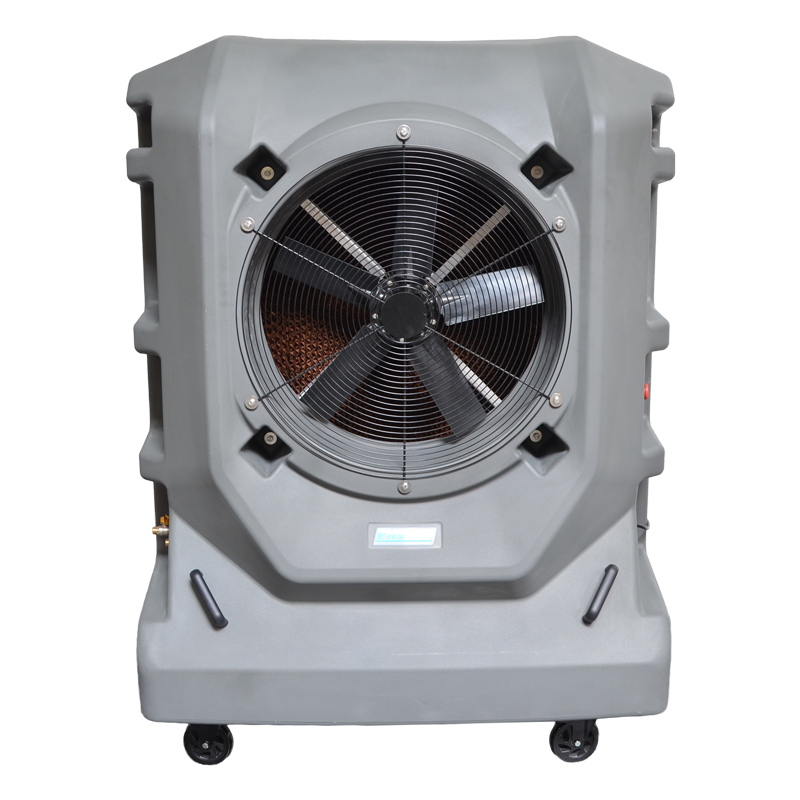
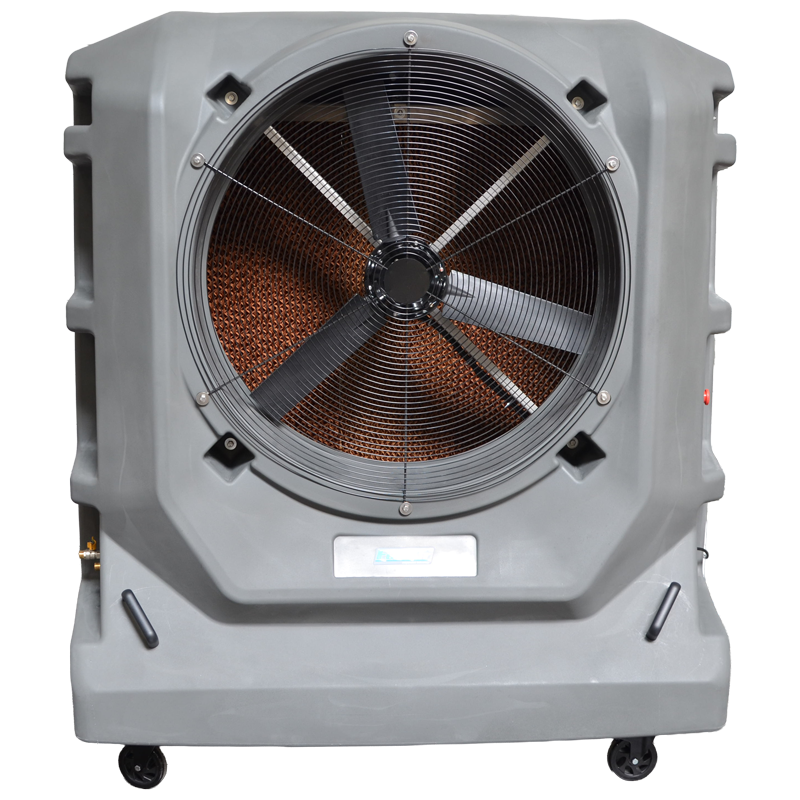
FoxAir designs high-performance mobile units for industrial environments and very large volumes. The Foxair 250 and 350 mobile adiabatic air conditioners are new-generation units capable of handling up to 500 m². They combine power with a compact footprint, adjustable air speeds and flow rates, weekly programming and an intuitive interface.