







Accueil | Livestock air cooler
Air cooler for livestock: limiting heat stress for animals
High temperatures, which are becoming the norm, impact animal health and production performance. Installing a livestock air cooler is a robust, cost-effective solution for professionals in the sector.
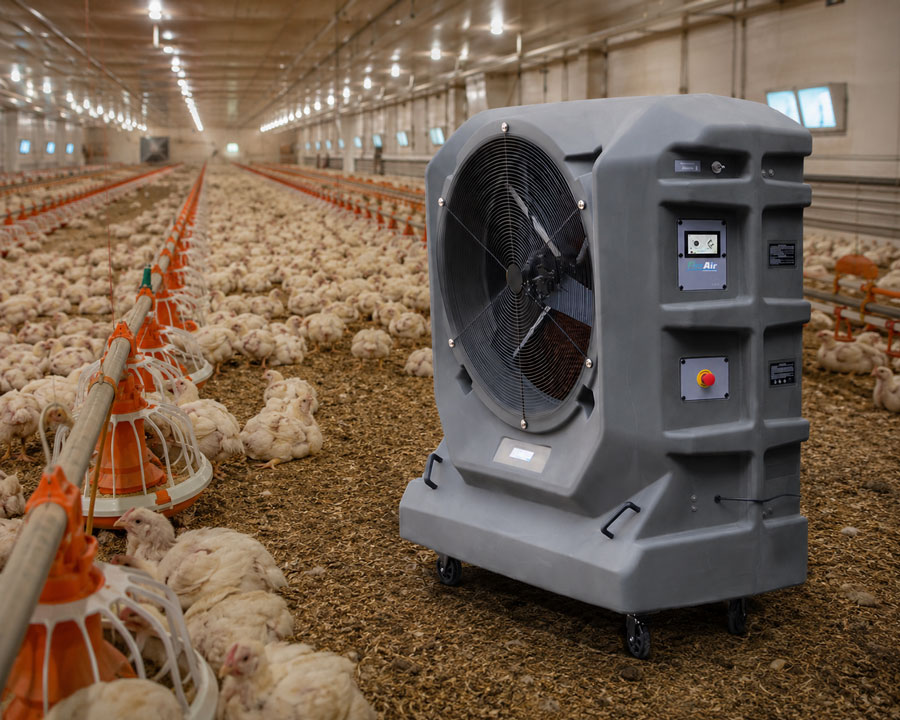
What are the temperature-related issues in livestock buildings?
The professional air cooler is the answer to the main problems encountered by livestock farmers:
- negative impact of heat on animal welfare ;
- increased health risks in high temperatures ;
- lower production (especially of milk) and slower growth during heatwaves;
- specific constraints of livestock buildings (poor insulation, dust, humidity, etc.).
Evaporative cooling on a livestock farm can overcome these problems without costly work or complex installation.
What cooling systems does FoxAir offer?
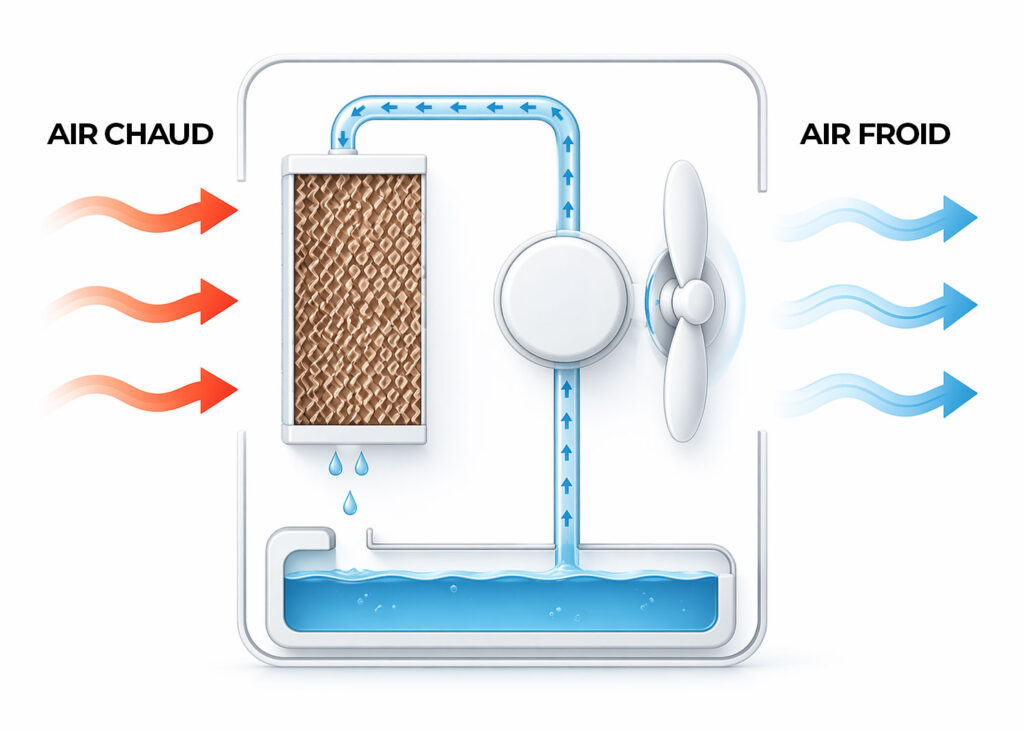
Our mobile coolers operate on the evaporation principle. Warm air is drawn in and passed through a humidified heat exchanger. This captures some of the heat and evaporates it. The cooled air is then returned to the building.
Installing an adiabatic cooler in a farm building reduces and regulates the temperature. Hygrometry and air circulation are improved, right from the start.
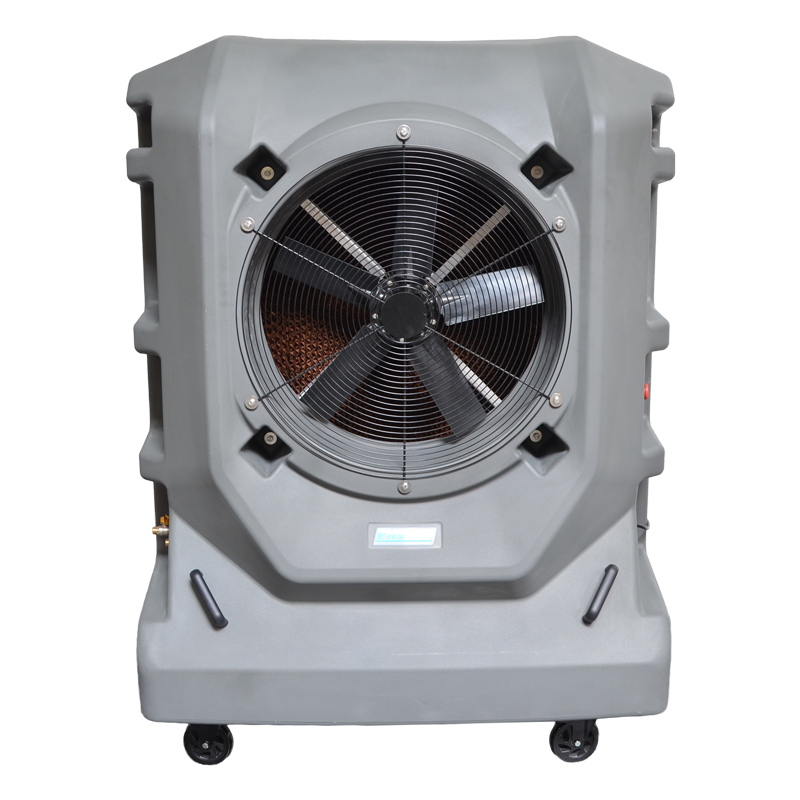
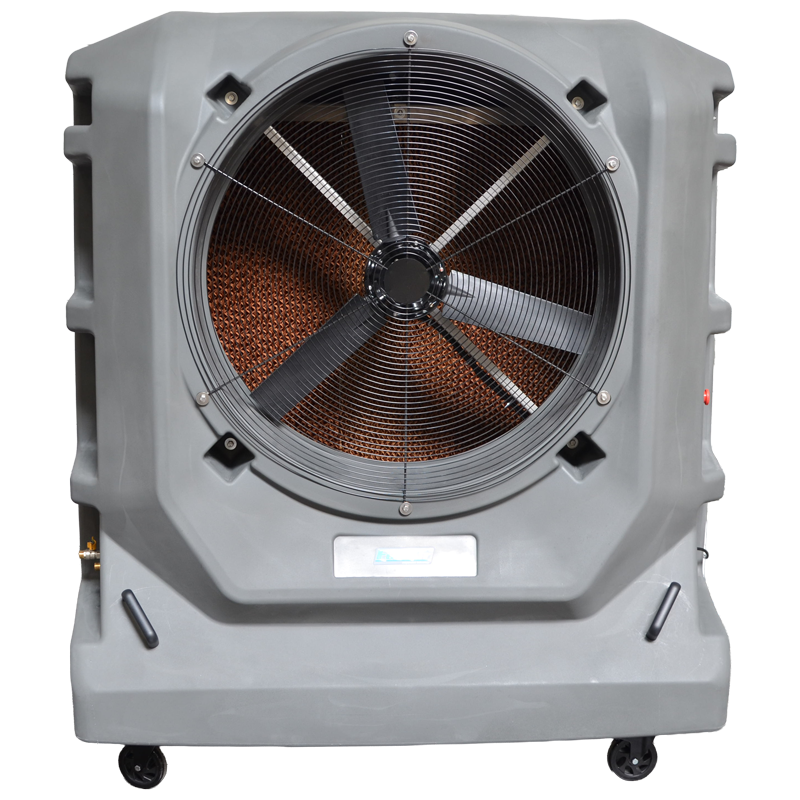
Low-noise, deployed in less than 48 hours, our devices require only an electrical connection. The capacity of the tanks allows for comfortable autonomy if it is not possible to connect them directly to a water supply.
Adiabatic cooling for livestock farming: what kind of performance can you expect?
Here’s an example of anadiabatic installation in an intensivelivestock farm.
This is a mixed farm (poultry and pigs). The buildings, ranging from 500 to 2,000 m², are enclosed or semi-enclosed. The high animal density increases heat and humidity. Temperatures regularly exceed 30 or 35°C. The result: stressed animals that grow and fatten more slowly.
In this configuration, FoxAir offers the installation of mobile air coolers protected by dust filters. The result: an immediate drop in temperature from 30 to 22°C and controlled humidity.
Our top-of-the-range adiabatic coolers stand up to harsh environments (dust, feathers and fur, ammonia, humidity…). Mobile, they can be moved to suit the animals’ needs. Finally, they are specially designed to cool very large volumes with low energy consumption.
Checklist: how to cool a livestock building?
Here are some key points to bear in mind when it comes to temperature control on livestock farms:
(liming the roof, limiting animal density, choosing lighting that doesn't heat up...).
with UV disinfection system
air and water flow rates, clean equipment
Our adiabatic coolers for livestock, with their WiFi control and fine-tuned settings, offer simple, effective management. They are robust and up to six times more economical than air-conditioning. If you have any questions or problems, FoxAir guarantees responsive after-sales service.
FAQ
How to control evaporative cooling humidity?
Our latest-generation units feature humidity control. When the specified threshold is reached, the cooler stops and restarts automatically. You cool while controlling humidity.
What heat gain can be achieved in a livestock facility?
One of the advantages of adiabatic cooling is that the warmer it is, the more efficient the unit. You can expect the temperature to drop by 7 to 8°C, or even more.
What is the environmental impact of adiabatic cooling?
This is “clean” technology. The unit operates without refrigerant, and emits only water.
In which types of farm buildings should an adiabatic cooler be installed?
This system is equally suited to cooling livestock buildings and horticultural greenhouses. It can also be adapted for use in pet stores and garden centers.